

Author: Sofia Pantazi, November 21, 2026 | Source: Sofia Pantazi
We all try to justify the perfect first date. When the chemistry is there and everything seems to fall into place, we're quick to tell our friends how wonderful the evening was. But what happens when, a few days later, he takes too long to reply, stops calling or no longer interacts with our Instagram stories? Suddenly, our perception changes. We start revisiting the date, picking apart little comments and gestures that didn't bother us at the time, and naturally turn to our friends for a second opinion. What was once the perfect date slowly becomes a list of potential incompatibilities.
Are we recognising things we initially overlooked, or simply finding reasons to justify our disappointment? Are we giving up too quickly, or are we finally learning to respect our boundaries?
The honeymoon phase of a first date
There is a particular kind of excitement that comes with a first date that goes exceptionally well. The kind that makes you return home smiling, replaying conversations in your head and immediately reaching for your phone to tell your friends everything. He was charming, the bar was beautiful, the cocktails were flowing, the conversation was effortless, and he was, perhaps most importantly, completely your type. He kissed you exactly how you wanted to be kissed. What more could you possibly ask for?
At that moment, there is very little room for criticism. Everything is interpreted in the most favourable way possible. Even the things that might ordinarily make you raise an eyebrow are brushed aside because the overall experience is simply too good to question. You present the date to your friends as a success story. He did everything right, you had chemistry, he made an effort, and you're already looking forward to seeing him again. But the date itself is only a few hours of someone's time. What happens afterwards is often where our expectations really begin to show.
When the texting stops, the investigation begins
I recently experienced exactly this. A man slid into my Instagram DMs. One of my pictures had apparently travelled a little further than expected, and I had caught someone's attention. We started talking, and he was relatively consistent. Not excessively so, because he was a busy man, but there was a certain rhythm to it. He would usually text me in the evenings, ask how my day had been and keep the conversation going.
Eventually, he planned a date. He took me to a lovely cocktail bar, we had several drinks, laughed, talked and enjoyed each other's company. He was very French, very charming and, unfortunately for my ability to remain objective, very much my type. The chemistry was undeniable. He was a great kisser, the evening progressed naturally, and we eventually ended up sleeping together. There was no awkwardness, no particular hesitation and certainly no shortage of attraction. It was passionate and I was ready to repeat this date.
At the end of the evening, he mentioned that he wanted to see me again and asked me to let him know when I got home. I did. The following day, he texted again, telling me that he was thinking about me but had a particularly busy week ahead. So far, so good. Except that a couple of days later, the communication started becoming less frequent. Replies took longer, conversations weren't flowing in the same way, and the little evening messages that had become part of our routine were suddenly missing. And that is when my perception started changing.
Suddenly, the things I overlooked became the things I couldn't stand
This is where things get interesting. When the date was fresh in my mind, I had very little to complain about. But once I became frustrated with his communication, I started revisiting certain moments that hadn't particularly bothered me at the time.
For example, we had discovered that we were politically quite aligned. A little leftist political baddie situation, if you will. However, he casually mentioned that he didn't vote. Now, this is something I genuinely struggle with. I don't particularly appreciate political disengagement, especially when someone otherwise appears to share my political values. I find participation important, and I don't necessarily understand the decision not to exercise that right. But during the date, I decided not to make a big deal out of it. We were having a good evening, and I didn't feel the need to turn a cocktail date into a political debate. Looking back, however, I found myself increasingly irritated by it.
Then there was another moment. I had previously mentioned that I had once had sex in a club. During the date, he made a joke about us going to that particular club together. At the time, I laughed. It was clearly intended as a joke, and I didn't think he meant anything unpleasant by it. But after the communication started slowing down, I found myself reconsidering the comment. Was it actually funny? Was it slightly disrespectful? Why did I find it amusing at the time?
And suddenly, I was collecting little pieces of evidence. Perhaps I didn't like that particular comment. Perhaps I wasn't entirely convinced by something else he had said. Perhaps there were other details I hadn't paid attention to because I was too busy enjoying myself. It's remarkable how quickly a man can go from being the most attractive person in the room to someone whose every sentence deserves a second review.
The Art of Ruining a Perfect First Date
The group chat becomes the courtroom
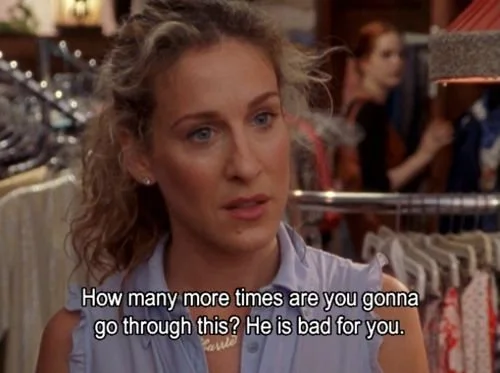
At some point, most of us have presented a man to our friends as the next potentially great romantic development, only to return a few days later with an entirely different assessment. The first conversation is full of excitement: he's lovely, the date was amazing, he planned everything and there was undeniable chemistry. A few days later, the same group chat receives a different update. He hasn't replied, he hasn't called, and he hasn't even liked your latest story.
Naturally, everyone has an opinion. One friend thinks he's playing games, another thinks he's simply busy, while someone else reminds you that a man who is interested will always make time. And before long, the entire evening is being dissected by people who weren't even there. Every comment is reconsidered, every interaction analysed, and every small detail suddenly seems relevant.
What is particularly interesting is how much our friends can influence our retrospective perception. They weren't there. They didn't experience the chemistry, hear the tone of his voice or see the way he looked at you. They only have the version of events you choose to present, and that version is already influenced by how you're feeling. When you're happy, you tell the story with enthusiasm. When you're disappointed, you tell it with frustration. The same evening can suddenly sound like two completely different experiences.
Perhaps our friends aren't changing our minds. Perhaps they're simply helping us articulate feelings we hadn't quite acknowledged ourselves. But there is also a danger in allowing five different people to influence how we feel about one person we've only met once. At what point does seeking a second opinion become outsourcing our romantic decisions?
Are we confusing boundaries with expectations?
I think this is where modern dating becomes particularly complicated. We have become very comfortable talking about boundaries, standards, emotional availability and knowing our worth. And rightly so. There is nothing wrong with expecting consistency, communication, respect and genuine interest from someone we are dating. We should not have to beg someone to make an effort, repeatedly explain the bare minimum or convince ourselves to accept behaviour that makes us uncomfortable.
But I sometimes wonder whether we have started confusing boundaries with expectations that haven't even been communicated. A boundary might be deciding that you don't want to pursue someone who consistently disappears, only contacts you when it's convenient or makes you feel like an option. An expectation might be deciding that someone is no longer interested because they haven't replied within four hours, haven't called the day after your date or haven't interacted with your Instagram stories.
The distinction matters because someone not liking your Instagram story isn't necessarily a reflection of their feelings towards you. Someone having a busy week doesn't automatically mean they have lost interest. And someone not communicating in precisely the way you would prefer doesn't necessarily mean they are incapable of showing up emotionally. Equally, we shouldn't have to rationalise every instance of inconsistency. There is a difference between giving someone the benefit of the doubt and continuously making excuses for them. Perhaps the real challenge is learning when to do which.
The illusion of the perfect man
There is another possibility worth considering: perhaps the problem is that we are increasingly dating an idea of someone rather than the person themselves. During the first date, we experience a carefully limited version of another human being. We see their charm, their humour, their appearance, their interests and the chemistry between us. We don't yet know how they behave when they're stressed, how they communicate when they're overwhelmed, how they handle disagreements or what their intentions actually look like over time.
And yet, we sometimes expect to establish all of this almost immediately. We want the excitement of a new connection, but we also want the reassurance of an established relationship. We want spontaneity, but we want consistency. We want someone who is independent and busy, but also someone who somehow always has enough time to make us feel like a priority.
We might even find ourselves rejecting someone for being too available, only to become frustrated when someone else isn't available enough. And let's not forget the more extreme examples. He didn't remember the exact cocktail you ordered? Perhaps he isn't attentive. He didn't offer to walk you home? Perhaps he lacks consideration. He follows too many women on Instagram? Perhaps he's not serious. At some point, the requirements become so specific that even a perfectly decent person could struggle to pass the interview.
Perhaps this is also a consequence of having more access to information, more conversations with friends and more dating experiences to compare. We know what we don't want, and we're becoming increasingly unwilling to entertain it. The question is whether this makes us more discerning or simply less tolerant of the uncertainty that comes with meeting someone new.

Featuring: Kim Cattrall and Sarah Jessica Parker in “Sex And The City”, 1998.
So, are we giving up too quickly?
I don't necessarily think the answer is that we should be more forgiving. Nor do I think every first date deserves a second chance. Sometimes, you genuinely don't like someone. Sometimes, a comment reveals a fundamental difference in values. Sometimes, the chemistry is there, but the compatibility isn't. And sometimes, someone's behaviour after the date tells you everything you need to know.
But I do think there is something to be said about allowing an experience to remain what it was, rather than rewriting it entirely because the outcome wasn't what we hoped for. I had a lovely date. I was attracted to someone. We had chemistry, enjoyed ourselves and shared an evening that I would probably have described as an excellent first date. His communication afterwards disappointed me. Both things can be true.
I don't have to pretend the date was suddenly terrible because I'm annoyed with him. I also don't have to ignore things that genuinely matter to me just because I enjoyed kissing him. Perhaps respecting our boundaries means being able to identify what actually matters to us, rather than creating new dealbreakers every time someone disappoints us. And perhaps giving someone a chance doesn't mean giving them unlimited access to our time, energy or attention.

The final verdict?
Maybe we're not giving up too quickly. Maybe we're simply no longer willing to spend months discovering that someone isn't right for us. But perhaps we're also becoming so accustomed to evaluating people that we've forgotten how to experience them.
Not every slow reply deserves an investigation. Not every disagreement deserves a discussion with the group chat. Not every imperfect interaction is a sign that something is fundamentally wrong. At the same time, we shouldn't have to talk ourselves into liking someone, excuse behaviour that doesn't sit right with us or lower our standards simply because the first date was good.
I suppose what I'm trying to figure out is whether we're becoming better at recognising what we want, or whether we're becoming increasingly skilled at finding reasons not to want someone.
Because there is a rather amusing contradiction in spending an entire evening convincing your friends that you've finally met someone wonderful, only to spend the following week convincing them that you actually can't stand him.
And maybe, just maybe, we should give ourselves a little more time before reaching either conclusion. After all, if we expect someone to take the time to get to know us, shouldn't we be willing to do the same?